
If you’ve ever searched for the best way to make iced coffee at home, you’ve almost certainly landed on two camps: Japanese iced coffee (also called flash brew coffee) and cold brew. They’re both delicious. They’re both cold. And they both have passionate fans who’ll tell you their method is objectively superior. So which one actually is? This guide breaks down everything — flavor, ease, time, cost, and caffeine — so you can decide which belongs in your morning routine.
What Is Japanese Iced Coffee (Flash Brew Coffee)?
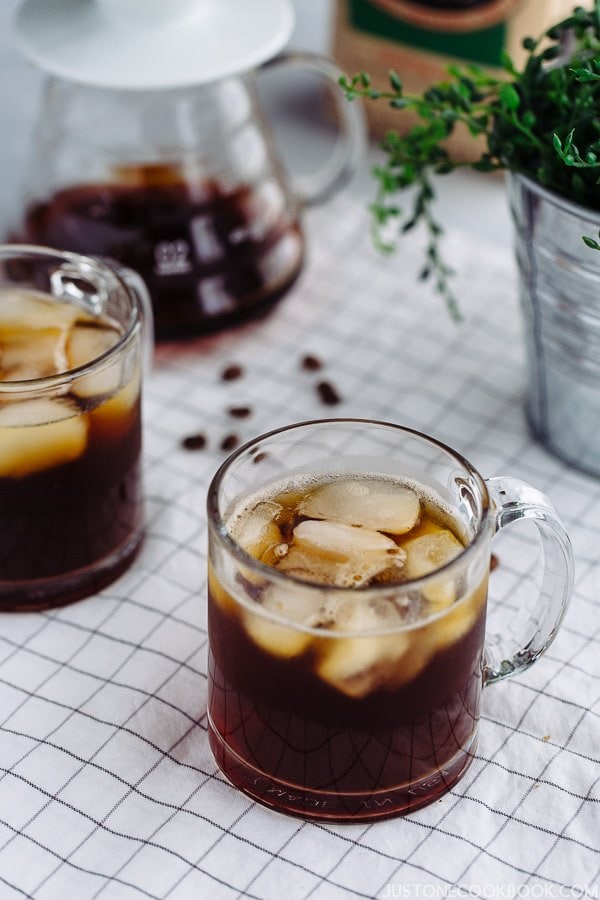
Japanese iced coffee — sometimes called Japanese flash brew, flash brew coffee, or ice brew coffee — is a method where hot coffee is brewed directly onto ice, chilling it instantly. The most common version uses a pour over dripper (like a Hario V60) with the ice sitting in the vessel below, though you can also use a drip machine.
The science behind it is elegant. Hot water extracts coffee’s full aromatic compounds — fruity acids, floral notes, bright sweetness — while the immediate contact with ice locks those flavors in before oxidation can dull them. The result is a cup that’s bright, complex, and vibrant in a way that regular iced coffee (brewed hot and left to cool) simply isn’t.
Other names for this method:
- Japanese iced coffee — the most common name in Western coffee circles
- Flash brew coffee — preferred by specialty coffee professionals
- Ice brew coffee — another variation of the same technique
- Japanese pour over iced coffee — specifically when using a pour over method
- Hot bloom iced coffee — refers to the blooming step used in the pour over process
What Is Cold Brew Coffee?
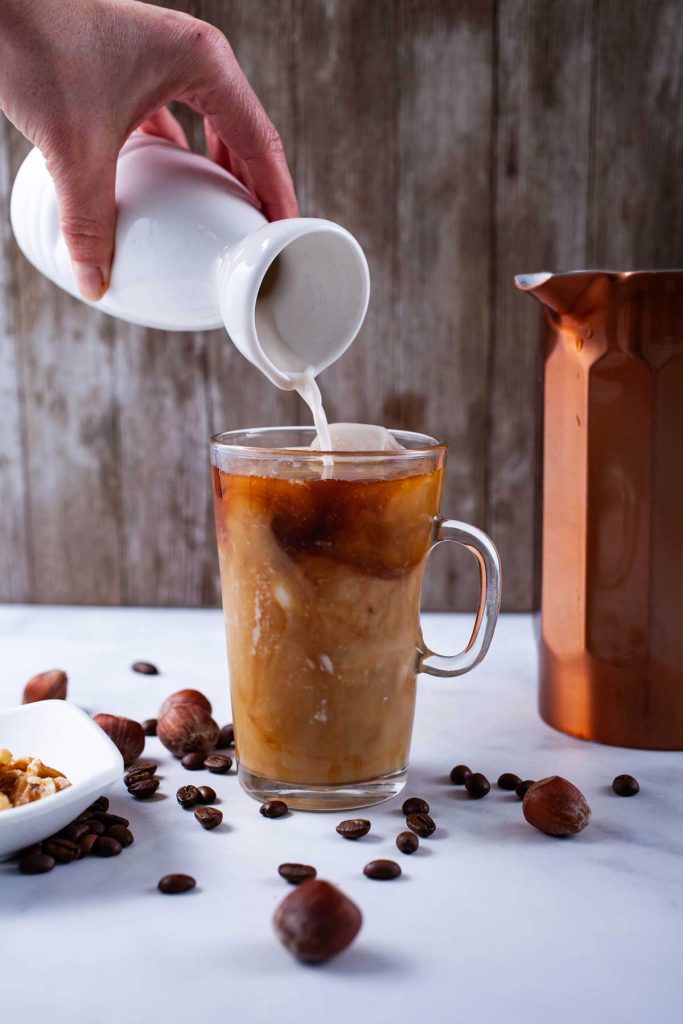
Cold brew is made by steeping coarsely ground coffee in cold or room-temperature water for an extended period — typically 12 to 24 hours — then straining out the grounds. No heat is involved at any stage. The result is a concentrate that’s smooth, naturally sweet, low in acidity, and noticeably different in flavor from any hot-brewed coffee.
Because cold water extracts coffee slowly and selectively, it leaves behind many of the acidic and bitter compounds that hot water pulls out. This makes cold brew particularly popular with people who find regular coffee harsh on the stomach, or who simply prefer a mellower, chocolatey flavor profile.
Other names for this brewing method:
- Cold brew coffee — the broad term for any cold-steeped coffee
- Cold brew concentrate — a stronger ratio designed to be diluted before drinking
- Slow drip cold brew — a more labor-intensive method using a tower dripper
- Immersion cold brew — the simplest method: grounds sit in water for the full steep time
Japanese Iced Coffee vs. Cold Brew: Head-to-Head Comparison
| Category | Japanese Flash Brew | Cold Brew |
|---|---|---|
| Flavor | Bright, fruity, aromatic, complex | Smooth, mellow, chocolatey, sweet |
| Acidity | Medium — higher than cold brew | Low — best for sensitive stomachs |
| Brew Time | 3–5 minutes ✓ | 12–24 hours |
| Ready To Drink | Immediately ✓ | Next day (requires planning) |
| Equipment | Pour over brewer, kettle, scale, filters | Mason jar, strainer — no special gear ✓ |
| Coffee Usage | Standard ratio (~1:15) — economical ✓ | High ratio (~1:4–1:8) — uses more coffee |
| Best Roast | Light to medium (fruity, floral notes) | Medium to dark (chocolate, caramel) |
| Shelf Life | Drink immediately | Up to 2 weeks (concentrate) ✓ |
| Batch Brewing | Not practical — one cup at a time | Ideal for batch brewing ✓ |
| Difficulty | Moderate — requires technique | Easy — beginner-friendly ✓ |
| Best For | Flavor lovers, specialty coffee fans | Convenience, sensitive stomachs, meal prep |
Flavor
Japanese flash brew coffee: Bright, vibrant, and complex. Hot extraction brings out fruity acids and floral aromatics that cold water simply can’t pull out. Light and medium roasts particularly shine with this method — you’ll taste notes that would be completely lost in cold brew.
Cold brew: Smooth, mellow, and chocolatey. The cold steep produces a naturally sweet cup with very low acidity and a heavy, syrupy body. Dark and medium-dark roasts tend to work best.
Winner: Depends on your preference. If you love complexity and brightness — Japanese. If you prefer smooth and mellow — cold brew.
Brew Time
Japanese flash brew: 3–5 minutes. It brews in real time, just like a regular pour over — the only difference is the ice in the vessel. You get fresh iced coffee on demand.
Cold brew: 12–24 hours. You need to plan ahead. The payoff is a large batch of concentrate that lasts up to 2 weeks in the fridge — great for convenience across a whole week.
Winner: Japanese iced coffee for speed. Cold brew for batch prep and weekly convenience.
Equipment Required


Japanese flash brew: A pour over dripper (Hario V60, Chemex, or similar), filters, a gooseneck kettle, a grinder, and a scale. The barrier to entry is slightly higher and the technique matters.
Cold brew: A large jar or dedicated cold brew maker, a coarse grinder, and a strainer or filter. Extremely forgiving — technique barely matters as long as ratios and time are right.
Winner: Cold brew for simplicity. Japanese iced coffee rewards those who enjoy the ritual of brewing.
Cost & Coffee Usage
Japanese flash brew: Uses a standard amount of coffee (around 15g per 250ml). Cost-efficient and uses the same beans you might already brew hot.
Cold brew: Uses significantly more coffee — typically a 1:5 to 1:8 ratio of grounds to water. A batch can use 100–150g of coffee, making it more expensive per serving unless you buy in bulk.
Winner: Japanese iced coffee is more economical per cup.
Caffeine Content
Both methods can produce a similar caffeine level per cup, but cold brew concentrate — before dilution — is considerably more caffeinated. Once diluted to a normal drinking strength, they’re broadly comparable. If you drink cold brew undiluted or lightly diluted, expect a significantly stronger caffeine hit.
Winner: Roughly even at standard dilution. Cold brew wins if you prefer a stronger caffeine punch.
How to Make Japanese Flash Brew Iced Coffee at Home
This recipe uses a Hario V60, but the same principle applies to any pour over dripper.
What You’ll Need
- 20g medium-fine ground coffee (slightly coarser than a standard pour over grind)
- 150g ice (placed in your server or glass below the dripper)
- 150g hot water (93–96°C)
- Hario V60 or pour over dripper of your choice
- Gooseneck kettle and scale
Method
- Place 150g of ice in your server or carafe beneath the dripper.
- Rinse the filter with hot water (discard the rinse water — but not the ice).
- Add 20g of ground coffee to the filter.
- Bloom: pour 40g of hot water over the grounds and wait 30 seconds.
- Continue pouring the remaining 110g of water slowly in a circular motion over 2–3 minutes.
- The brewed coffee drips directly onto the ice and chills instantly. Serve immediately over additional ice if desired.
Pro tip: Use a 50/50 split of water and ice by weight (e.g. 150g water, 150g ice) for a perfectly balanced, non-watered-down cup. Adjust to taste — more ice for a lighter cup, less for a stronger one.
How to Make Cold Brew Coffee at Home


This is the immersion method — the simplest and most foolproof approach to cold brew.
What You’ll Need
- 100g coarsely ground coffee
- 700ml cold or room-temperature filtered water
- A large jar or cold brew maker
- A fine mesh strainer or cheesecloth
Method
- Add coarsely ground coffee to your jar.
- Pour cold water over the grounds and stir gently to ensure all grounds are saturated.
- Cover and refrigerate for 12–18 hours (longer = stronger; 24 hours maximum).
- Strain through a fine mesh strainer or cheesecloth into a clean jar. Strain twice for a cleaner cup.
- Store in the fridge for up to 2 weeks. Serve over ice, diluting 1:1 with water or milk if using as a concentrate.
Pro tip: Room-temperature steeping (12 hours) produces a slightly brighter, less flat flavor than cold fridge steeping (18–24 hours). Try both and see which you prefer.
Which Should You Choose?
- Choose Japanese flash brew coffee if: you love bright, complex flavours; you enjoy the pour over ritual; you want fresh iced coffee in under 5 minutes; or you use light or medium roast beans.
- Choose cold brew if: you prefer smooth, low-acid coffee; you want a ready-made batch for the whole week; you have sensitive digestion; or you enjoy dark roasts.
Honestly? The best move is to try both. They produce such different flavour profiles that most coffee lovers eventually find a place for each depending on mood, season, or the beans they happen to have. Japanese flash brew for single-cup moments of intention; cold brew for busy mornings when you just want to pour and go.
Frequently Asked Questions
Is Japanese iced coffee the same as flash brew coffee?
Yes — they’re the same thing, just different names. “Japanese iced coffee” is the term most commonly used in home coffee communities, while “flash brew” is the term specialty coffee professionals tend to prefer. Both refer to the method of brewing hot coffee directly onto ice.
Is Japanese iced coffee stronger than cold brew?
At standard dilution, they’re broadly similar in caffeine. However, cold brew concentrate — before it’s diluted — is considerably stronger. Japanese iced coffee doesn’t come in a concentrate form; it’s brewed to drinking strength immediately.
Can you make Japanese pour over iced coffee without a V60?
Absolutely. Any pour over dripper works — Chemex, Kalita Wave, Origami, or even a basic flat-bottom dripper. You can also adapt the method for a drip machine by placing a pitcher of ice under the brew basket.
Does cold brew have more caffeine than regular iced coffee?
Cold brew concentrate does, yes — but once diluted to a normal drinking strength (usually 1:1 with water or milk), the caffeine content is similar to a regular cup of coffee. The difference matters most if you’re drinking it undiluted.
What coffee beans work best for each method?
Japanese flash brew brings out brightness and complexity, so it shines with light to medium roasts — especially single-origin coffees with fruity or floral notes. Cold brew suits medium to dark roasts, where the slow cold extraction emphasizes chocolate, caramel, and nutty flavors without the bitterness.
Is cold brew less acidic than Japanese iced coffee?
Yes. Cold water extracts far fewer acidic compounds than hot water. Cold brew is noticeably lower in acidity, which makes it gentler on the stomach. Japanese flash brew, being hot-extracted, retains more of the coffee’s natural acids — though it’s still considerably less acidic than regular hot coffee that has sat on a warming plate.
Final Verdict – Which Method Is Better?
Japanese iced coffee and cold brew aren’t really competing — they’re complementary. Flash brew gives you vibrant, aromatic, freshly brewed iced coffee in minutes. Cold brew gives you a smooth, low-acid, batch-made concentrate that lasts all week. Neither is objectively better; they just serve different needs. If you’ve only ever tried cold brew, making a Japanese pour over iced coffee for the first time will genuinely surprise you — and vice versa.